Pockets and compartments
Slip pockets, zipped pockets, dividers and elastic loops give bag contents a place. Compare their uses and limitations to choose a layout that balances quick access, separation and usable space.
Fast Facts
Purpose
Give smaller items their own place and separate them from the bag’s main contents.
Slip pockets
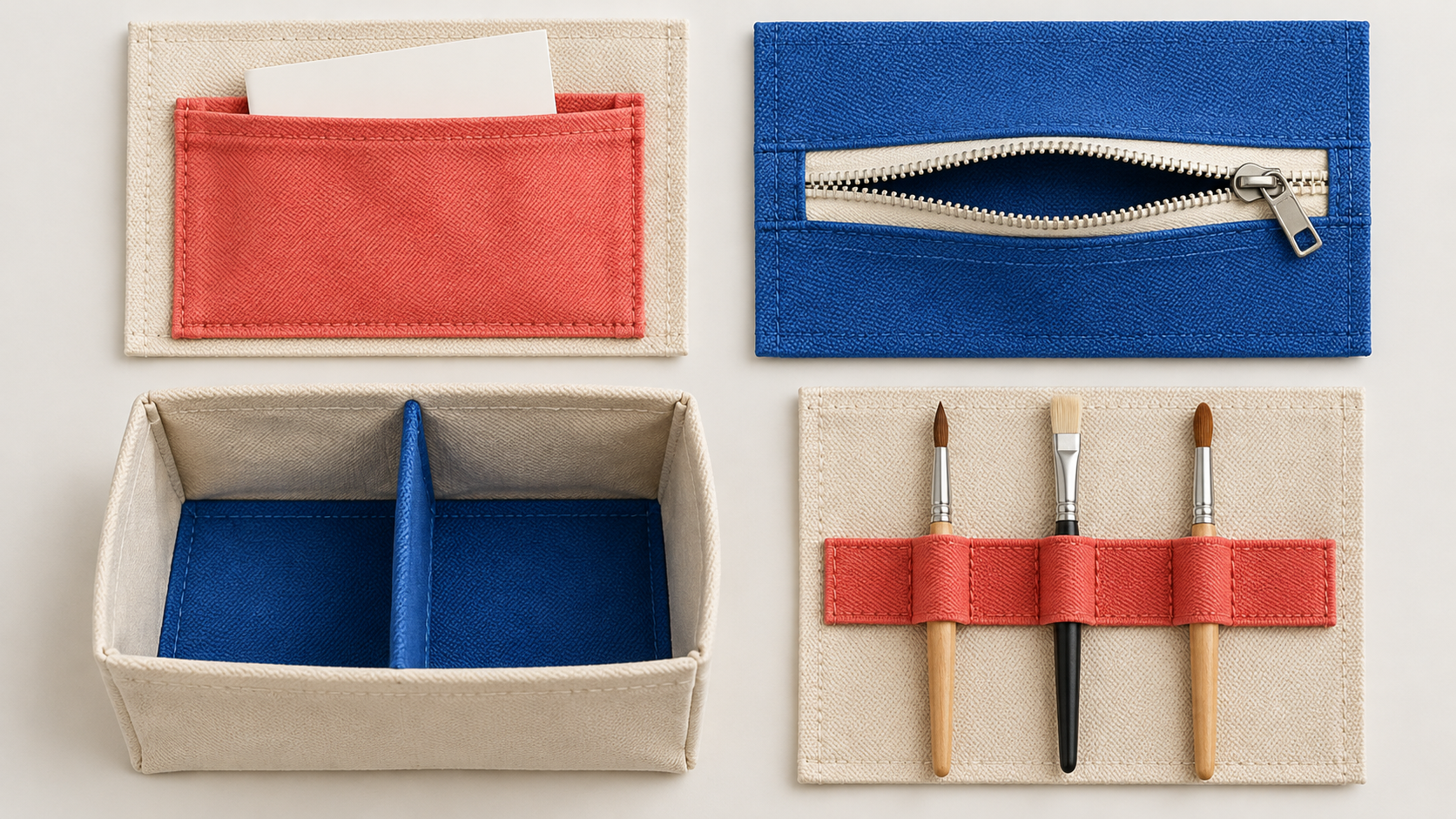
Open at the top, these pockets provide quick access without a fastening.
Zipped pockets
A zipper closes the pocket opening to help keep small items inside.
Dividers
Fabric panels split the main space into sections for different items.
Elastic loops
Strips of elastic form individual holders for items such as pens, brushes or rolled cables.
Placement
Interior features organize contents inside the bag; exterior pockets keep frequently used items within reach.
Why choose it?
Pockets and compartments make sense when a bag carries several items that users need to find quickly. A slip pocket keeps a notebook handy, while a zipped pocket contains loose accessories. Dividers separate larger items, and elastic loops hold narrow objects in place. Compared with one open compartment, a planned layout reduces rummaging and helps users pack consistently.
Things to consider
Extra pockets and dividers add fabric, seams and bulk, leaving less flexible space for larger contents. Heavy items can pull a pocket and its supporting fabric out of shape, so attachment points may need reinforcement. Open pockets can spill when a bag tips over. Elastic must fit the intended objects: loose loops provide little grip, while tight loops make removal awkward. Keep organizers below a drawstring channel so they do not obstruct closing. Compartments alone do not provide impact protection or contain leaks.
Customization options
Choose the number, size, depth and position of pockets around the items your bag will carry. Options may include solid fabric or mesh pockets, matching or contrasting colors, different zipper openings, fixed or removable dividers, and elastic loops with different widths and spacing. Mesh lets users see contents, while solid fabric hides them. Your bag’s fabric, shape and intended contents will determine which combinations work; we’ll need to confirm availability.
Best suited for
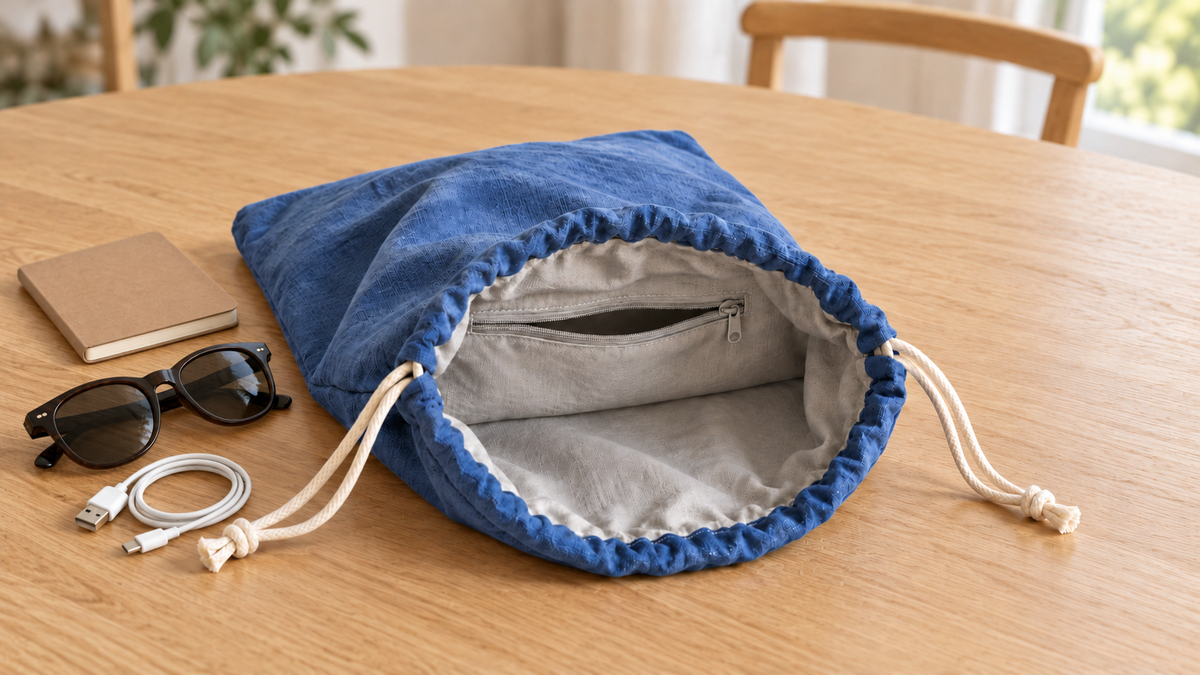
These features suit cosmetic bags, travel organizers, accessory pouches and bags that carry a regular set of tools or supplies. Firm woven fabrics support more structured layouts, while lightweight pouches generally benefit from fewer, simpler pockets. A roomy drawstring bag can accommodate an internal pocket without dividing its entire storage space.
Need this customization for your bags?
Tell us the bag type, quantity and requirements, and we’ll help you work out the right specification.