Seams, Edges and Reinforcement
Compare reinforced stitching, internal seam finishes, piping and edge binding. Understand what each treatment does, where it belongs and how fabric choice affects the finish of your custom bag.
Fast Facts
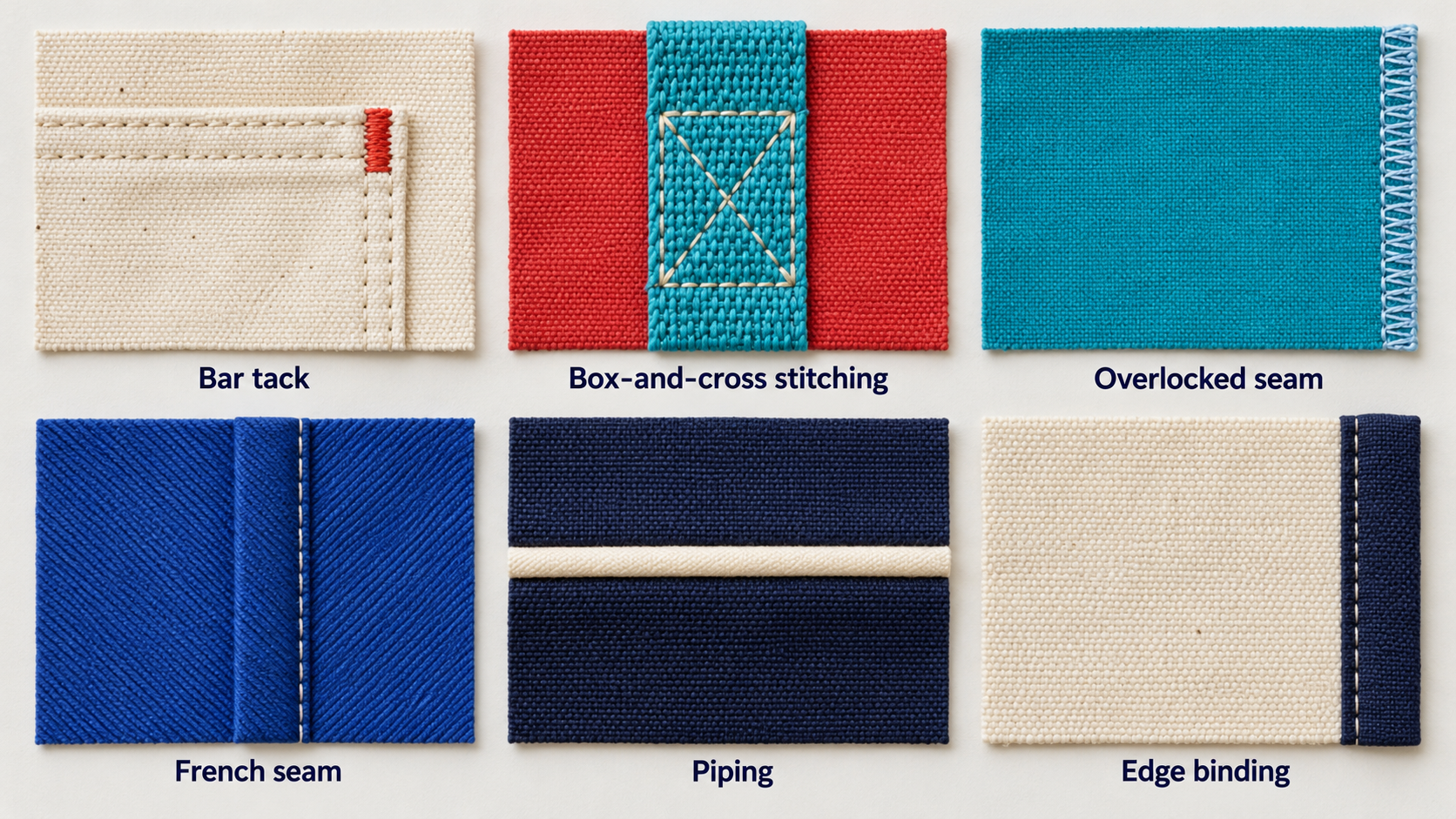
Bar tacks
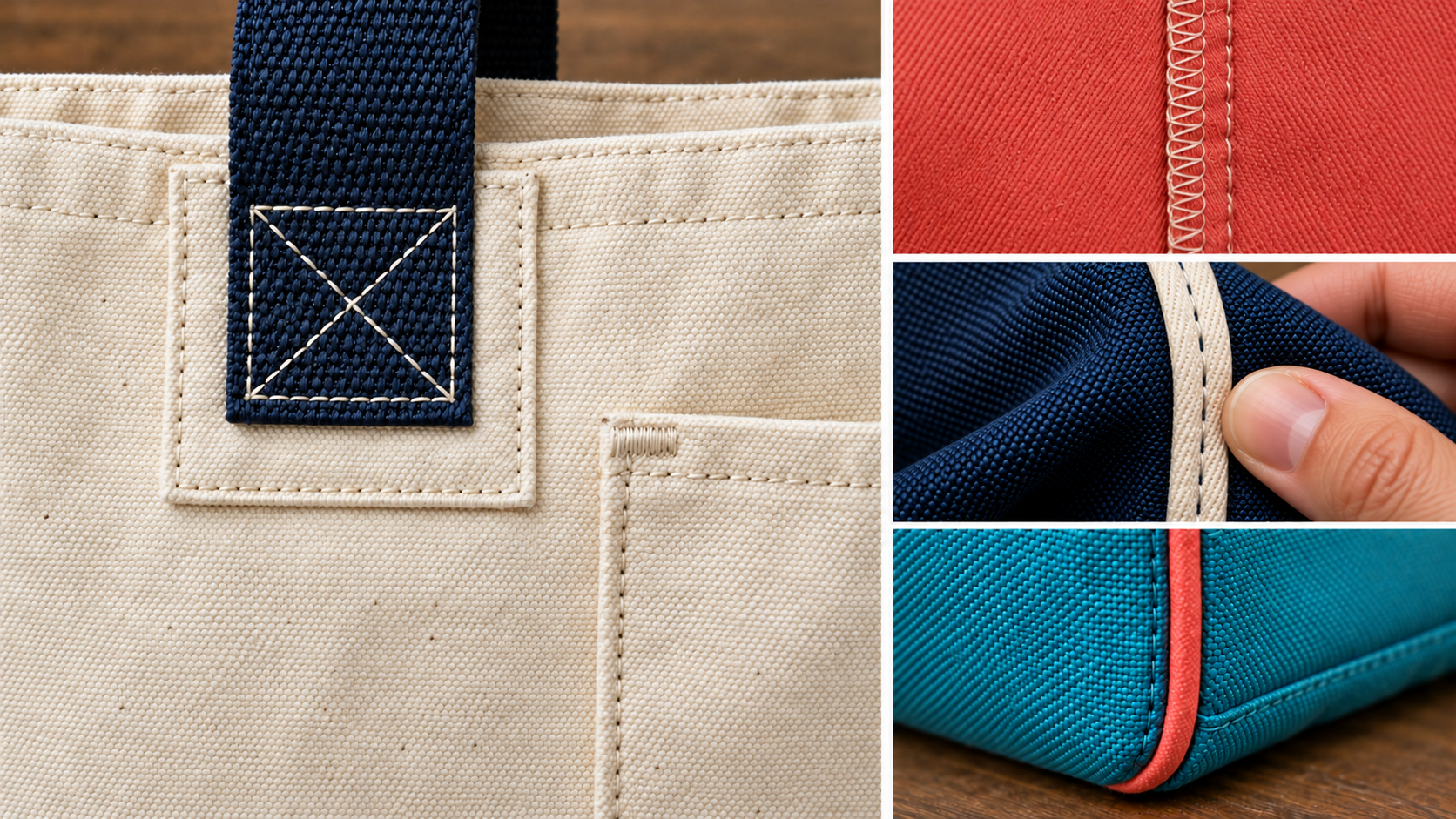
Short, dense rows of stitches support small stress points, such as pocket corners and the ends of openings.
Box-and-cross stitching
A stitched rectangle with a diagonal cross secures overlapping layers, commonly where webbing straps meet the bag.
Reinforced attachment points
Extra fabric beneath a handle or tab helps spread the pull across a larger area of the bag.
Seam finishes
Overlocking covers raw edges with thread. Enclosed seams hide them within folded fabric.
Piping
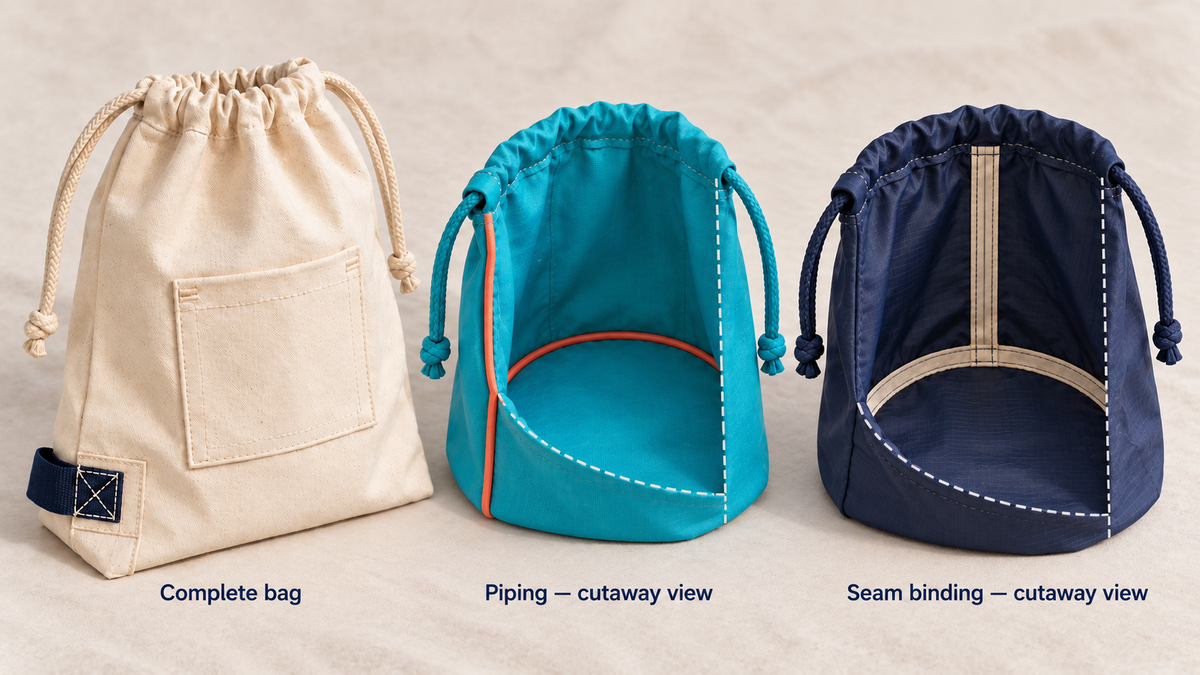
A narrow raised trim sits between joined panels to outline a seam in matching or contrasting color.
Edge binding
Fabric tape wraps exposed edges or internal seam edges, creating a bound finish in matching or contrasting colors.
Why choose it?
Choose these details when the inside finish matters as much as the outside appearance. Seam finishes and binding help control fraying and cover exposed cut edges. Reinforcement supports handles, tabs and other points that take repeated pulls, while piping gives the bag a more defined outline.
Things to consider
Extra layers and trims add bulk, especially at corners and seam intersections. Heavy binding or firm piping can distort a lightweight pouch, while dense stitching can damage delicate fabric. Reinforcement needs suitable fabric underneath it. A particular stitch pattern does not establish the bag’s carrying capacity, and none of these treatments alone makes a seam waterproof.
Customization options
Possible choices include thread color, reinforcement size and position, seam finish, binding material and width, and piping color and thickness. Matching trims keep the finish understated; contrasting trims highlight the construction. Your fabric and bag design will determine which combinations work; we’ll need to confirm availability.
Best suited for
Canvas bags and firm woven nylon or polyester bags can suit reinforced attachments and defined piping. Unlined bags benefit from tidy internal seams, while mesh bags can use binding around exposed edges. Softer pouches need lighter finishes that preserve their flexibility.
Need this customization for your bags?
Tell us the bag type, quantity and requirements, and we’ll help you work out the right specification.